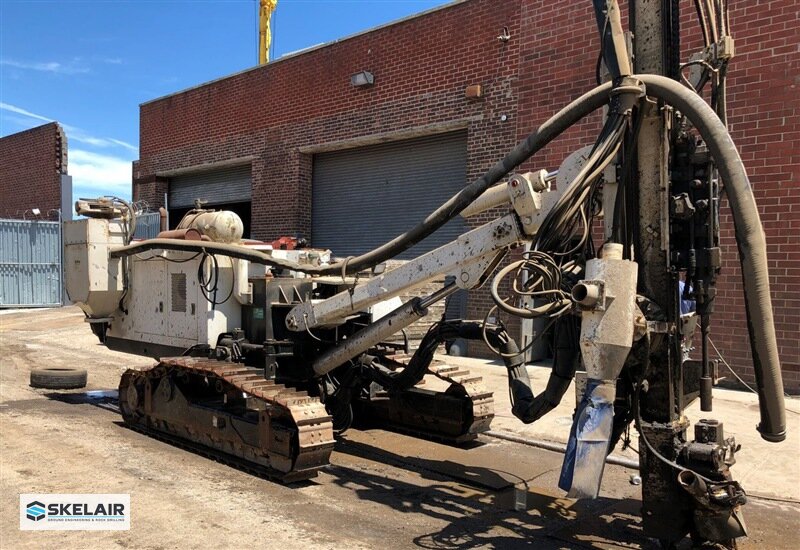
Used drill rig buying begins with the work the machine must perform, rather than a comparison of asking prices. A cheaper rig can become an expensive purchase if its tooling is incompatible, its history is unclear or the support needed to return it to service has been underestimated. For a UK buyer, the practical task is to establish suitability, condition and the complete cost of mobilisation. An attractive advertisement provides leads to investigate; it does not replace a documented inspection or an assessment of the proposed drilling system.
Used drill rig: define what you need before viewing
Write an application brief
Before inspecting a used drill rig, describe the drilling method, anticipated ground, required hole geometry and sampling or installation objective. Include access, working space and the support plant already available to the business. This brief helps distinguish a machine that genuinely suits the work from one that could be adapted only after substantial additional expenditure. Ask which configuration the seller is offering and whether the specification includes the equipment needed for the actual method, rather than assuming that a general description establishes the full capability.
Separate capability from included equipment
A used drill rig may have been photographed with tooling, a compressor or handling equipment that is not part of the sale. Obtain an itemised schedule and identify the part references and condition of important accessories, with exclusions stated explicitly. If a method requires another assembly or power arrangement, establish compatibility and obtain a current quotation before valuing the package. The equipment inventory should describe what will actually be transferred, not a mixture of standard options, historical configurations and items the seller could provide at an additional price.
Establish used drill rig identity and history

Match the machine to its records
For a used drill rig, record the machine identity and check that the documentation relates to the equipment being inspected. Clarify the model, serial identification, configuration and any relevant changes, using the available manufacturer information rather than relying on an advertisement alone. A plate or a set of manuals does not, by itself, establish condition or compliance. If information conflicts, resolve it before purchase and keep a record of the evidence, especially where the machine has moved between markets or has been rebuilt using replacement components.
Read maintenance evidence critically
The value of a used drill rig history lies in what the records demonstrate. Service entries, inspection information, repair invoices and details of modifications can help explain the machine’s condition, while missing periods remain uncertainties that require consideration. Recorded hours provide context but are not a complete measure of wear or proof of the machine’s treatment. Ask a suitable independent specialist to assess important gaps and identify whether further checks are justified, rather than interpreting a tidy appearance or recently painted panels as evidence of a well-maintained operating system.
Plan a competent used drill rig condition assessment
Inspect the complete working arrangement
Inspection of a used drill rig should follow a defined scope suitable for the machine and purchase decision. Arrange competent assessment of the relevant structures, mechanisms, power systems, controls and safety-related equipment, alongside the documentation and maintenance requirements applicable to it. This article cannot provide a universal pass-or-fail checklist for every rig design. The specialist should identify what was examined, what could not be examined and which findings affect further investigation, repair or acceptance, so the buyer understands the limits of the inspection. Before inspecting a particular machine, it is worth being clear about which type of drilling rig the work actually requires.
| Area of enquiry | Evidence or question to resolve |
|---|---|
| Identity | Do records and identification match the actual machine? |
| Configuration | Is the offered setup suitable for the required method? |
| History | What maintenance, repairs and modifications are documented? |
| Condition | What does the competent assessment establish or leave uncertain? |
| Tooling | What is included, and is its condition and compatibility verified? |
| Support | Are technical information, service and suitable parts obtainable? |
| Return to service | What work and verification are needed before planned use? |
Define what a demonstration proves

A demonstration of a used drill rig can help show how the machine operates in the conditions presented, but it does not prove performance across every formation or expose every defect. Agree the proposed demonstration with the seller and the inspecting specialist, including the safe arrangements and the evidence to be recorded. Distinguish a machine running without load from a representative demonstration of the relevant functions. If a function cannot be checked, carry that limitation into the purchase assessment instead of treating an untested item as satisfactory by default.
Review tooling as a separate asset
Tooling supplied with a used drill rig needs its own identification and condition assessment. Compatible-looking connections, worn consumables and undocumented adapters can undermine the value of an otherwise useful package, so establish which parts are serviceable and appropriate for the intended system. Ask for the relevant instructions and inspection criteria rather than accepting a pile of components as equivalent to ready-to-use stock. A clear tooling schedule supports valuation and avoids ordering replacements against an assumed configuration that differs from what the machine actually needs.
Calculate the used drill rig return-to-service cost
Include repairs, transport and support
The cost of a used drill rig extends beyond the agreed purchase price. Transport, unloading, inspection, repair, consumables, compatible tooling and the support arrangement can all affect the amount needed before productive work begins. Obtain current quotations for identified work and keep uncertain items separate rather than disguising them as a precise total. The return-to-service budget should also allow the programme to reflect what must happen before use, especially when a buyer is considering a machine for a contract whose start date is already fixed.
Check parts and technical assistance

Before buying a used drill rig, establish how the business will obtain technical information, servicing and suitable replacement parts. The availability of a seller’s stock is not the same as a continuing support arrangement, so identify who can answer a technical question after the sale. Where a component is obsolete or the configuration has changed, ask what approved solution exists and what it would cost. Parts availability is particularly important when one unavailable interface or specialist component could interrupt the work for longer than the project can accommodate.
Make the purchase decision traceable
Allocate responsibilities in the agreement
The agreement for a used drill rig should identify the equipment, included items, known condition, payment and transfer arrangements, with any repairs or checks promised by the seller clearly described. Ask the appropriate professional to review contractual uncertainties that materially affect the purchase. For regulatory context this guide defaults to England; check current HSE and product-supply guidance applicable to the machine and transaction, including the proposed use and any import or modification history. This is general information, not legal, engineering or professional safety advice.
Keep suitability separate from a low price
A used drill rig should be accepted against the intended work and the evidence obtained, with unresolved concerns stated openly. An apparently generous discount cannot establish suitability where a key function remains untested or the cost of a necessary repair is unknown. Compare the purchase with alternatives on the same basis, including hire or another machine whose support and preparation needs are better understood. A purchase assessment that records the reasoning helps the business explain its decision and prevents an optimistic viewing-day assumption from becoming an undocumented operating commitment.
Decide what happens before first use
After buying a used drill rig, complete the agreed preparation and checks before introducing it to the planned task. Make the relevant instructions and condition information available to the people responsible for planning, operating and maintaining the machine, including any familiarisation required for its actual configuration. Record the status of outstanding items so the delivery itself is not mistaken for clearance to work. The handover from purchasing to site operations matters because those teams may otherwise hold different assumptions about what has already been inspected, repaired or approved.
Conclusion
A suitable used drill rig is one whose capability, condition, included equipment and support fit the proposed work at an understood total cost. Define the application, verify identity and history, commission a competent assessment and price the preparation needed before use. That process makes the purchase reviewable and gives the operating team a documented machine configuration, rather than a collection of attractive claims that still need resolving after the money has changed hands.
