
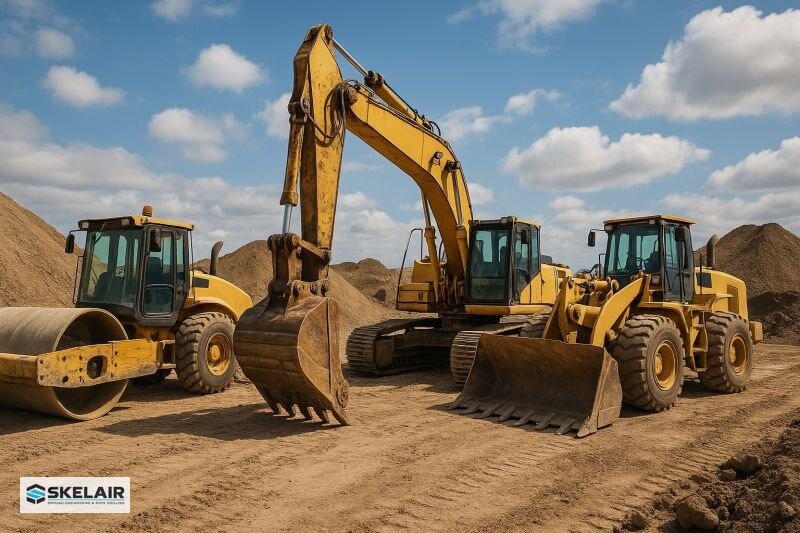
Construction equipment should be chosen around the work it must complete, the conditions in which it will operate and the people who will use it. A large machine can be the wrong choice for restricted access, while a compact alternative may fit through the gate but struggle to deliver the required output. For UK project teams, a useful comparison therefore connects the task with capacity, operating space, support and the commercial arrangement. Buying or hiring by machine category alone leaves too much of that decision until the equipment arrives on site.
Construction equipment: define the task before comparing machines
Describe the required result and working conditions
A good construction equipment brief describes what must be achieved rather than naming a preferred machine at the outset. For excavation, that includes the material, depth, working area and destination of the spoil; for material handling, it includes the load, route and placement conditions. Provide access restrictions and programme requirements alongside the task, because those details can change which options are practical. The supplier can then explain a proposed solution against a measurable requirement instead of trying to infer the work from an approximate model size.
Keep the intended production separate from the assumptions that make it achievable. A machine’s output depends on the surrounding operation, including deliveries, waiting time, repositioning and the availability of the next workface. If an excavator has nowhere to place material or a loader must wait for transport, greater nominal capacity may not improve progress. Ask what the full cycle involves and which part currently limits it, then assess whether a change of equipment would address that constraint or simply move the queue elsewhere on the site.
Use specifications in their operating context

For construction equipment, a headline capacity rarely describes every possible configuration. The applicable load, reach, attachment, support conditions and operating arrangement must be checked in the relevant manufacturer information, with competent planning for the task. A machine described by its maximum reach does not automatically carry a particular load at that position. Similarly, engine power is not a complete measure of productive output. Compare the information relevant to the proposed operation and ask the supplier to identify any limitations that affect the configuration being offered.
| Equipment family | Common task | Important selection question |
|---|---|---|
| Excavators | Excavation and work with compatible attachments | Does the actual configuration suit access, ground and the task? |
| Loaders and dumpers | Handling and moving material | Can the routes, loading points and unloading areas support the operation? |
| Telehandlers and lifting plant | Moving or placing specified loads | What planned lifting arrangement and configuration are required? |
| Compaction plant | Applying a specified compaction process | Does the equipment suit the material, layer and acceptance requirements? |
| Drilling and piling plant | Forming holes or installing foundation elements | Is the method appropriate to the ground and finished requirement? |
| Pumps and power equipment | Supporting the construction process | What duty, supply and operating conditions must be maintained? |
Understand the main construction equipment families

Excavation, loading and movement of material
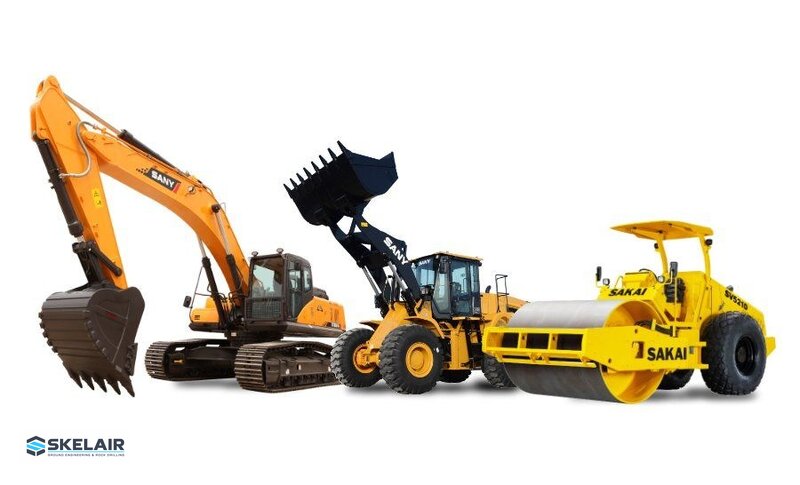
Excavators are used for excavation and can support other tasks with compatible equipment, while loaders focus on handling material and dumpers or other transport plant move it between locations. Their roles overlap in a site operation, but their practical strengths depend on the task and layout. Compare construction equipment as a working sequence: where material is excavated, how it is loaded, which route it follows and what happens at its destination. A well-matched loading machine can still be held up by inadequate transport or a congested unloading area.
Access needs more detail than a gate width. Consider turning, gradients, surface condition, visibility and the space required at working positions, including how other people and vehicles use the same route. The material flow should also reflect the order of construction, because a route available during early excavation may be blocked by later work. Include those changes in the plant plan and identify when a different arrangement becomes necessary, rather than assuming that equipment selected at the beginning remains suitable for every stage of the programme.
Lifting, placement and compaction
Telehandlers, cranes and other lifting arrangements require selection against the actual loads and proposed operations. A machine’s general description does not replace the relevant planning, configuration and operating information. When comparing construction equipment for placement work, include the lifting accessories, landing arrangements and route through the site, with the appropriate competent planning and coordination. The buyer should make the intended use explicit, because a hire offer that appears to provide the right machine may not include the services or responsibilities needed for the complete lifting operation.
Compaction equipment serves a different requirement: applying an appropriate process to the specified material and layer. The choice of roller, plate or other arrangement depends on the work, access and design requirements, with testing or other verification planned as necessary. Do not treat machine size as proof that a layer has achieved the required result. Ask how the proposed process will be established and checked, including how material condition, restricted edges and later layers affect the operation, so the equipment choice connects with acceptance of the completed work.
Specialist plant and supporting services
Drilling rigs, piling machines and specialist treatment equipment are selected primarily through the required construction method and ground conditions. Their support plant can be as important as the carrier, including compressors, pumps, mixers or material-handling arrangements. When reviewing this construction equipment, ask for the complete system and its operating footprint rather than checking only the main machine’s dimensions. Specialist input should establish how the method will achieve the required output and what happens if actual ground conditions differ from the assumptions used in the quotation.
Pumps, generators, lighting and other support equipment also need a defined duty. A pump selection depends on the required service and the proposed system, while a power supply needs to suit the actual demand and connection arrangements. Record who specifies these services and who checks their compatibility with the equipment they support. Treating them as miscellaneous extras can leave a productive machine idle or encourage an improvised arrangement, even when the main equipment purchase was carefully reviewed and the project has allowed enough time for mobilisation.
Match construction equipment to attachments and site conditions
Check interfaces and intended use
Attachments can broaden the tasks performed by construction equipment, but suitability must be checked for the complete combination. The carrier, attachment, connection and relevant operating requirements all need consideration, with the applicable manufacturer instructions available to the people planning and using the equipment. A physically matching connection is not a full compatibility assessment. Give the supplier the intended duty and ask for the configuration actually proposed, including any limits or changes to the working arrangement that follow from fitting a different attachment.
The attachment compatibility record should be specific enough to prevent an urgent replacement from being accepted only because it looks similar. Identify approved parts and the process for assessing substitutions, with responsibility assigned before the first delivery. The same principle applies to accessories and support equipment, where one overlooked interface can stop the whole operation. An equipment schedule that records only the main carrier leaves those decisions to whoever is available on the day, often when there is least time to check documentation or obtain a suitable alternative.
Assess working space and support conditions
The place where construction equipment operates needs assessment as well as the delivery route. Ground support, edges, slopes, overhead constraints and the operating envelope may all affect the arrangement, with the relevant equipment information and competent assessment informing the plan. A surface that accommodates a parked vehicle is not automatically suitable for a particular construction activity. Where a designed working platform or another engineered arrangement is needed, coordinate its specification, construction and acceptance with the plant mobilisation so the machine does not arrive before its work area is ready.
Space around the equipment must include the task, rather than just the machine’s stationary outline. Materials, support plant, people and maintenance access may occupy areas that a simple plan view overlooks. Check the required operating envelope against neighbouring work and the planned sequence, including how the machine moves between positions. If the site team proposes changing a position or configuration to fit a congested area, review the consequences through the appropriate planning process instead of treating the adjustment as a routine matter of finding a convenient gap.
Compare construction equipment hire, purchase and whole-job cost
Choose a commercial arrangement that fits utilisation
Hiring construction equipment can suit work with a defined duration or a changing need for plant, while purchase may be considered where continuing use and ownership responsibilities fit the business. Neither approach is inherently cheaper without the expected utilisation, support and cost information. Compare the same working requirement, including transport, availability, inspection, maintenance, storage and the consequences of downtime. A purchase price and a weekly hire figure describe different commitments, so a useful comparison puts them against the work and period being assessed rather than comparing the headline numbers directly. The Skelair archive includes companion articles on many of the points raised here.
Ownership also means arranging technical support and managing equipment between jobs. An asset that appears economical during a busy period may be less attractive when demand changes or the business needs a different configuration. For hire, establish whether a substitute can be supplied and how its suitability will be checked before use. The whole-job cost depends on the complete operation and the business’s actual circumstances; obtain current quotations and confirm the commercial terms rather than applying a generic utilisation threshold as if it settled every decision.
Read inclusions and responsibilities carefully
A construction equipment quotation should identify what is supplied, when it is supplied and which activities remain with the customer. Confirm transport, fuel or energy arrangements, accessories, setup, maintenance response and the terms governing loss, damage and return condition. Where an operator or a broader service is involved, clarify the scope and responsibility rather than assuming that the presence of a skilled person transfers every planning obligation. Commercial labels need to be understood through the actual agreement and the work being commissioned.
Keep programme assumptions visible when comparing offers. Availability on the planned start date matters, but so does the process for extending hire, changing equipment or dealing with a breakdown when the job cannot proceed. Identify who can authorise extra cost and what records will support a delay or variation. A quotation can be competitive and still unsuitable if its support arrangement cannot meet the programme, while an apparently fuller offer may contain allowances that the buyer would otherwise have to organise and pay for separately.
Organise delivery, use and maintenance
Connect equipment selection with competent use
Suitable construction equipment must be supported by appropriate information, competence and supervision for the actual use. A familiar machine category does not establish that an operator understands every attachment, control arrangement or site constraint involved in a new configuration. Confirm what instruction and familiarisation are needed, how relevant documentation will be made available and who coordinates the equipment with surrounding activities. The assessment should concern the work proposed, rather than relying on a generic statement that the crew has used similar plant before.
For regulatory context, this guide defaults to England; check current HSE guidance and the requirements relevant elsewhere in the UK where the work is located. Work-equipment suitability, maintenance and inspection need to be addressed alongside any additional requirements applicable to the particular activity. This article is general information, not professional advice, and it does not establish an operating procedure or a legal compliance determination for an individual machine. Those decisions require the actual equipment information, competent assessment and the site’s authorised arrangements.
Plan maintenance access and breakdown response
The maintenance plan for construction equipment should follow the applicable instructions and reflect the conditions of use. Establish who carries out checks, how defects are reported and what prevents suspect equipment from returning to service before the issue is resolved. Include access for planned maintenance and the practical arrangements for obtaining parts or support. A machine positioned solely for production may become difficult to inspect or maintain, making a routine task unnecessarily disruptive when the work area fills with materials or later construction.
A useful defect reporting process identifies the equipment, describes the issue and directs it to someone authorised to decide the response. It should also show the status clearly to others who might use the machine, especially where shifts or subcontractors change. Hired plant needs an agreed route to the supplier, while owned equipment needs its own support arrangements. In both cases, record the resolution and any limitations on return to use so that a verbal conversation does not become the only evidence that a reported problem has been considered.
Review production and environmental constraints together
The choice of construction equipment affects deliveries, energy provision, noise and the management of materials around the work. Compare those requirements for the actual duty rather than assuming that a broad powertrain label answers every environmental question. Where electrically powered equipment is proposed, the supply or charging plan must fit the work pattern and site arrangement; other systems have their own support requirements. Identify constraints early enough to influence procurement and the programme, instead of discovering after mobilisation that the equipment cannot be supported through a full working cycle.
Review output using evidence that explains the operation. Record useful work completed alongside delays, support interruptions and changes of task, so the team can distinguish a machine limitation from a site coordination problem. That information makes a later selection more reliable without pretending that one shift provides a universal productivity rate. At demobilisation, complete the agreed condition and return records and retain the information needed for any further work, allowing the next equipment decision to benefit from what the project actually learned.
Questions to settle before the order is placed
Can one machine replace several smaller items? Sometimes a compatible configuration can cover several tasks, but the programme must allow for changeovers and avoid relying on the same resource in two places at once. Is a delivered machine ready for immediate use? Delivery is only one stage: the site still needs the relevant checks, information, prepared work area and arrangements for the proposed operation. These should be planned before mobilisation rather than treated as unexpected delays after the hire period has started.
Should a replacement be accepted because it has a larger nominal capacity? A different machine can introduce new access, operating-space or support requirements, so the substitution needs assessment against the actual brief. Who should review a change of attachment or use? Identify the appropriate competent people and supplier input in advance, keeping the equipment record aligned with the working arrangement. Resolving these questions early gives procurement, the site team and the supplier a shared basis for deciding whether the plant delivered is the plant the project can actually use.
Conclusion
Choose construction equipment by connecting the required result with a suitable configuration, a workable site arrangement and clear support responsibilities. Compare complete operations and commercial scopes, then plan delivery, competence, maintenance and replacement before the equipment arrives. A productive choice is one the project can use and support throughout the relevant work, with records that show why it was selected and how its performance was assessed under the conditions actually encountered.
