

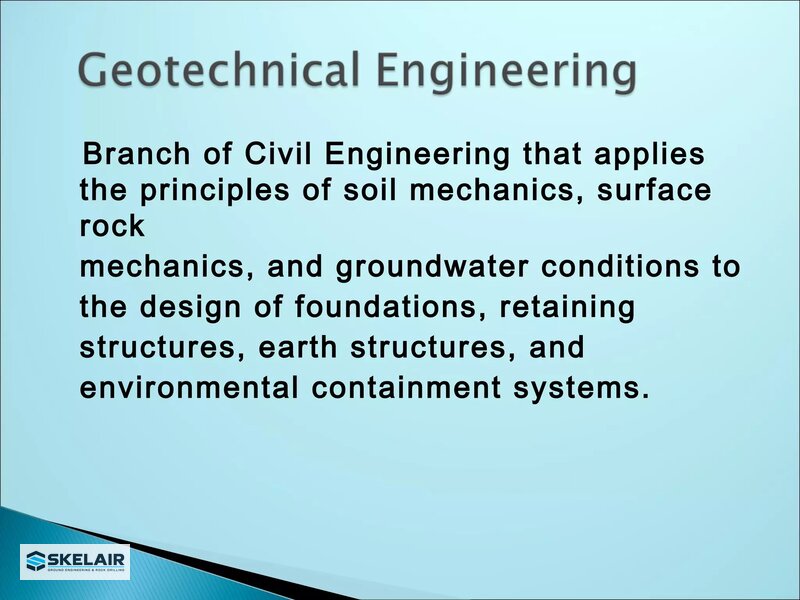
What is geotechnical engineering is a useful question whenever a project depends on how the ground will behave. The discipline applies engineering understanding to soil, rock and groundwater so that structures, excavations and other works can be planned and designed with appropriate evidence. For a homeowner, its value may be a foundation recommendation; for a civil engineer, it may involve an embankment, retaining structure or tunnel. The central task is connecting the proposed construction with a reasoned assessment of the ground, including the uncertainty that remains between investigated locations.
What is geotechnical engineering: connect ground behaviour with design
Understand the material supporting the work
To answer what geotechnical engineering is, begin with the fact that ground is variable rather than a manufactured material supplied to one consistent specification. Soil and rock can change across a site and with depth, while groundwater and construction activity can influence their behaviour. An engineer therefore needs evidence relevant to the proposed work, not merely a broad label such as clay or limestone. The assessment considers how the material and conditions interact with loading, excavation or another change created by the project.
Make a practical decision from imperfect information
The working geotechnical engineering involves decisions as well as tests. A designer might compare foundation options, estimate movements or assess how an excavation should be supported, using available evidence and identifying the limits of that evidence. The aim is not to promise that investigation reveals every feature beneath a site. It is to establish a defensible basis for the design and a process for responding where observations during construction differ from the assumptions on which the recommendation depends.
Use what is geotechnical engineering to understand key concepts
Resistance and movement are separate questions
Readers asking what geotechnical engineering is often encounter the term bearing capacity, which concerns the ground’s resistance to applied loading in the assessed arrangement. But resistance is only part of a foundation decision: movement also needs consideration against the structure’s requirements. A foundation can be unsuitable if settlement affects performance even where a simple capacity comparison appears satisfactory. The relevant assessment therefore connects loading, ground behaviour and the structure’s tolerance of movement, rather than choosing a foundation solely because it appears strong or extends deeper into the ground.
Water and construction sequence affect behaviour
Another part of geotechnical engineering is understanding why groundwater and the sequence of work matter. Water conditions affect how some ground behaves, and excavation or changes in drainage can alter conditions around the work. The temporary construction stage may present a different arrangement from the completed structure, so it requires its own appropriate assessment. A report that considers only the final building can leave an important gap if the work needs to pass through an unsupported excavation or another intermediate stage that has not been planned.
| Concept | Plain-English meaning | Why it matters |
|---|---|---|
| Ground model | An interpretation of the site’s material and conditions | Connects observations with design assumptions |
| Bearing resistance | The assessed ability of the ground to resist loading | Informs foundation and related design decisions |
| Settlement | Downward ground or foundation movement | Must be considered against structural performance |
| Differential movement | A difference in movement between locations | Can matter even when overall movement appears modest |
| Groundwater | Water conditions within the ground | Can affect excavation, design and construction methods |
| Uncertainty | What the evidence does not yet establish | Guides checks, contingencies and further investigation |
From what is geotechnical engineering to a site investigation
Plan evidence around the proposed works
A useful response to what geotechnical engineering explains how information is obtained. An assessment may begin with existing records and a site review, then use an investigation designed around the actual construction questions. Boreholes, trial pits, sampling, testing and monitoring serve different purposes, so no single list of activities suits every project. The brief should identify the proposed loading, geometry, neighbouring constraints and decision required, allowing the specialist to recommend an appropriate scope rather than selecting investigation work only by price or nominal depth.
Distinguish observations from interpretation
When learning what geotechnical engineering is, separate a factual record from a design conclusion. A log describes observations at an investigated location, while interpretation connects those observations with other evidence and the proposed work. Laboratory results also need context, including the sample and condition they represent. A ground investigation report should make its scope clear so that the reader knows whether it contains factual information only or includes the assessment needed for a design decision, rather than assuming that a bundle of test results automatically provides a foundation recommendation. The investigation stage is only one part of the discipline; the broader field of ground engineering and its methods covers how findings turn into works on site.
Explain what is geotechnical engineering through project roles
Work with structural and other specialists
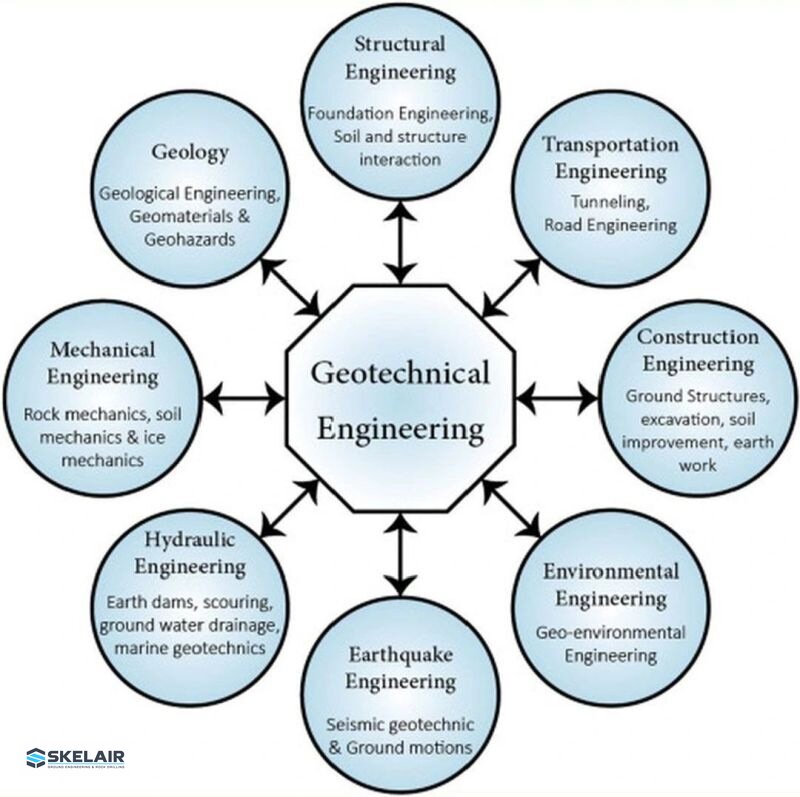
The question what is geotechnical engineering does not mean the discipline replaces all other project design. The geotechnical and structural teams exchange information about loading, geometry, movement requirements and ground behaviour, while other specialists may address contamination, drainage or water-related questions. Appointments need to identify who coordinates these interfaces and what each report covers. A foundation assessment can depend on information supplied by another designer, so changes to the building or load arrangement should reach the person whose recommendation relied on the original brief.
Keep construction observations connected to decisions

In practical terms, geotechnical engineering includes a route for new site information to influence the work. Ground encountered during excavation or drilling may confirm the interpretation or reveal a material difference, which should be recorded with enough location and context for review. Identify who assesses the finding and who can authorise a changed design or method. A construction-stage review helps prevent a report from becoming a static reference while the project continues using assumptions that new evidence has called into question.
Apply what is geotechnical engineering to commissioning advice
Ask for defined outputs
An owner researching what geotechnical engineering is can make an enquiry more useful by stating the project, existing information and decision needing support. Ask what factual work, interpretation and design advice are included, which assumptions will be used and what deliverables the appointment provides. Confirm whether monitoring or construction support is required and whether it is part of the offer. A clear technical brief makes quotations easier to compare without assuming that the cheapest fieldwork package will answer the same questions as a fuller assessment.
Read limitations as part of the recommendation
Understanding what geotechnical engineering is also means reading the report’s assumptions and limitations alongside its conclusions. Look for the proposed works to which it applies, the evidence available, any unresolved issue and the checks required during construction. A statement relying on particular conditions should not be detached from those conditions and treated as an unrestricted instruction. The design assumptions need to be available to the people carrying out the work, especially if access, sequence or the final building arrangement changes after the investigation was commissioned.
Know when site-specific advice is needed
No general answer to geotechnical engineering can establish an individual foundation depth, safe excavation arrangement or movement limit without the relevant information and competent assessment. This guide defaults to England for regulatory context; check current applicable guidance and the requirements relevant to the project’s location, including elsewhere in the UK. This article provides general information, not professional advice. A site-specific assessment is the appropriate route where a decision affects structural performance, neighbouring assets or the safety of the proposed construction, rather than relying on a generic online example.
Conclusion
The practical definition of geotechnical engineering is the use of evidence about soil, rock and water to support construction and design decisions. It combines investigation, interpretation and review, keeping movement, resistance, groundwater and uncertainty connected to the actual project. For anyone commissioning the work, the strongest starting point is a clear question and a defined scope, followed by a report whose assumptions can be understood and checked as construction proceeds.
