Center Rock hammer commonly means a down-the-hole hammer made by Center Rock, including its Force and Rock Xtreme product lines. These pneumatic tools place the impact mechanism immediately behind the bit, so energy is delivered at the bottom of the hole. Selecting one requires more than matching nominal diameter: the compressor, bit shank, ground, rig and flushing arrangement must work as a complete drilling system.
Center Rock hammer products explained
Down-the-hole operation
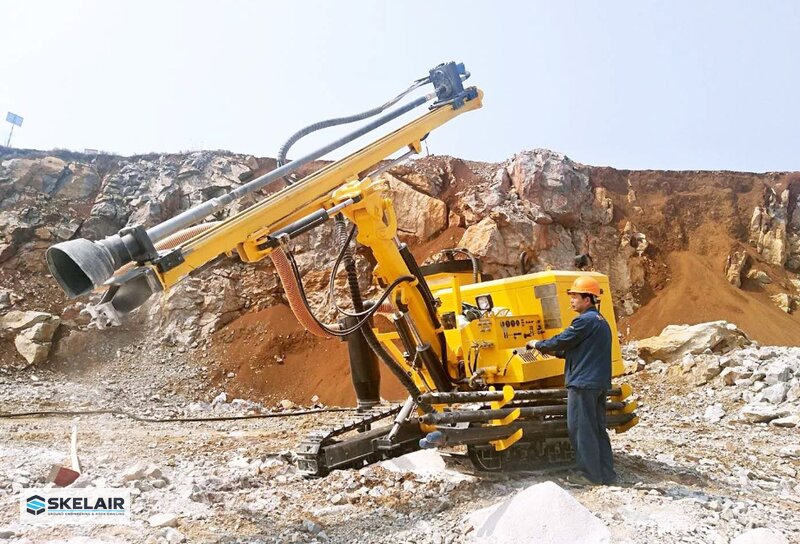
A DTH hammer cycles compressed air through an internal piston, which repeatedly strikes the bit while the drill string rotates. The arrangement can provide straighter holes and efficient hard-rock penetration when the equipment is correctly matched. A Center Rock hammer still depends on suitable rotation, hold-down and air volume from the carrier, so the hammer name alone says little about production.
Center Rock’s official product range separates DTH hammers from bits, canister drills, casing systems and support equipment. That distinction helps buyers build a system, but it also creates compatibility choices. Before ordering a Center Rock hammer, confirm the manufacturer’s current hammer-to-bit table, shank design, thread connection and intended operating range.
Force and Rock Xtreme families
The manufacturer lists Center Rock Force Hammers and Rock Xtreme Hammers as separate DTH categories. The official Rock Xtreme page describes the re-engineered RX series for hard, abrasive rock, with a high-frequency air cycle and shorter housing. This makes the Center Rock hammer search broader than one series and means a contractor should specify the exact family and size.
The RX range is currently presented in sizes from 4.5 to 17.5 inches, equivalent to about 114.3 to 444.5 mm, across eight hammer sizes. Published weights run from 92 to 933 lb across the family. These are range figures, so an individual Center Rock hammer must be checked on its own specification sheet before lifting, handling or rig-capacity decisions are made.
Matching hammer, bit and air supply

Diameter and shank compatibility
The required finished hole and the available bit designs set the starting point. Bits must carry the shank made for the selected hammer, while the face design and carbide layout should suit the rock and flushing needs. A Center Rock hammer paired with an incompatible or badly worn bit can lose energy, damage components or make removal difficult.
Do not assume that two nominally similar hammers accept interchangeable bits. The RX page highlights its own tube-free shank design, and the manufacturer provides a corresponding bit range. Procurement records for a Center Rock hammer should therefore include the exact part identifiers for hammer, bit, chuck and backhead connection.
Compressor and rig requirements
Air pressure and volume must remain within the model’s current specification and account for hole depth, leakage and altitude. A compressor that cannot maintain demand may leave the hammer cycling poorly and flushing inefficiently. The chosen Center Rock hammer also needs a rig capable of appropriate rotation, feed control and safe handling of the complete drill string.
Oversupplying air is not a sensible shortcut because seals, lubrication and other parts are designed for stated operating limits. Use the manufacturer’s current chart and allow for hoses, fittings and water injection where specified. A matched compressor helps a Center Rock hammer work consistently while avoiding conclusions based only on a compressor’s headline rating.
| Selection factor | Practical check |
|---|---|
| Hole requirement | Finished diameter, depth, straightness and inclination |
| Formation | Hardness, abrasiveness, fractures and water conditions |
| Hammer and bit | Exact series, size, shank and available face designs |
| Air package | Required pressure, volume, hose bore and treatment |
| Drill rig | Rotation, feed control, mast capacity and connections |
| Support | Spares, lubrication guidance, service tools and technical advice |
Applications and site considerations

Construction, quarry and water-well work
Center Rock lists applications including construction, mining and quarry drilling, geothermal work, water wells, utilities, overburden and directional drilling. That does not mean every model suits every use. A Center Rock hammer for production blastholes may face different priorities from one chosen for a straight geothermal bore or restricted construction site.
Rock character can vary considerably within a project, changing penetration and bit wear. Trial data from comparable formations is useful, but it should be interpreted alongside hole diameter, air package and operator practice. A Center Rock hammer comparison is most meaningful when the competing systems drill under similar conditions and the team records metres, time, fuel and consumable use consistently.
Flushing performance deserves separate observation because cuttings that remain at the bit can be re-ground, raising wear and masking the tool’s true rate. Teams should watch the return, note water entry and adjust only within the approved operating guidance. Recording penetration rate without noting delays, bit condition or cleaning time gives an incomplete comparison, particularly where fractured bands alternate with stronger intact rock.
Handling and exposure controls
The lighter, shorter construction promoted for the RX range may assist handling and low-headroom work, but the larger tools remain substantial loads. Plan mechanical handling, secure storage and controlled make-up and break-out. A Center Rock hammer should never be lifted by an unapproved point or worked on while pressure remains trapped in the system. The same handling discipline applies to bits, rods and adapters, which are covered in more detail in our guide to rock drilling tools.
Drilling also creates noise, dust, flying debris and movement risks. The site plan should provide exclusion, guarding where required, suitable dust suppression or capture and appropriate hearing controls. This drilling safety information is general; the risk assessment, manufacturer instructions and current UK health-and-safety guidance should govern use of a Center Rock hammer.
Maintenance and purchasing decisions

Inspection and servicing
Clean air and correct lubrication are central to pneumatic-hammer life. Inspect threads, chuck, piston, seals and wear surfaces at the manufacturer’s intervals, and investigate sudden changes in sound, air consumption or penetration. A Center Rock hammer that continues to run while parts are outside limits can cause damage that is more expensive than planned servicing.
Keep service records tied to the hammer serial or asset number and measure components with the proper tools. Dirt introduced during assembly can score internal parts, so maintenance needs a clean area and suitable storage plugs. Using approved service procedures protects the Center Rock hammer and gives the team a reliable basis for deciding when parts should be replaced.
Questions before buying or hiring
Ask the supplier for the current data sheet, operating limits, bit options and spare-parts list for the exact tool. Confirm what connection is supplied and whether the rig and compressor can support it. For a used Center Rock hammer, request service history and internal inspection evidence rather than judging condition from the outer casing.
Availability matters as much as purchase price. A low-cost tool can be poor value if the correct bits, seals or technical support are difficult to obtain. Compare total drilled cost, downtime risk and support for a Center Rock hammer, then agree which parts should be held on site for the expected ground and programme.
Conclusion
Center Rock offers more than one DTH family, with the current Rock Xtreme range covering eight sizes between 4.5 and 17.5 inches. The right Center Rock hammer is the model whose bit system, air demand and handling needs align with the bore and the rig. Verify the latest specifications, control exposure and pressure hazards, and maintain the tool from measured wear rather than assumptions throughout its planned working life.
